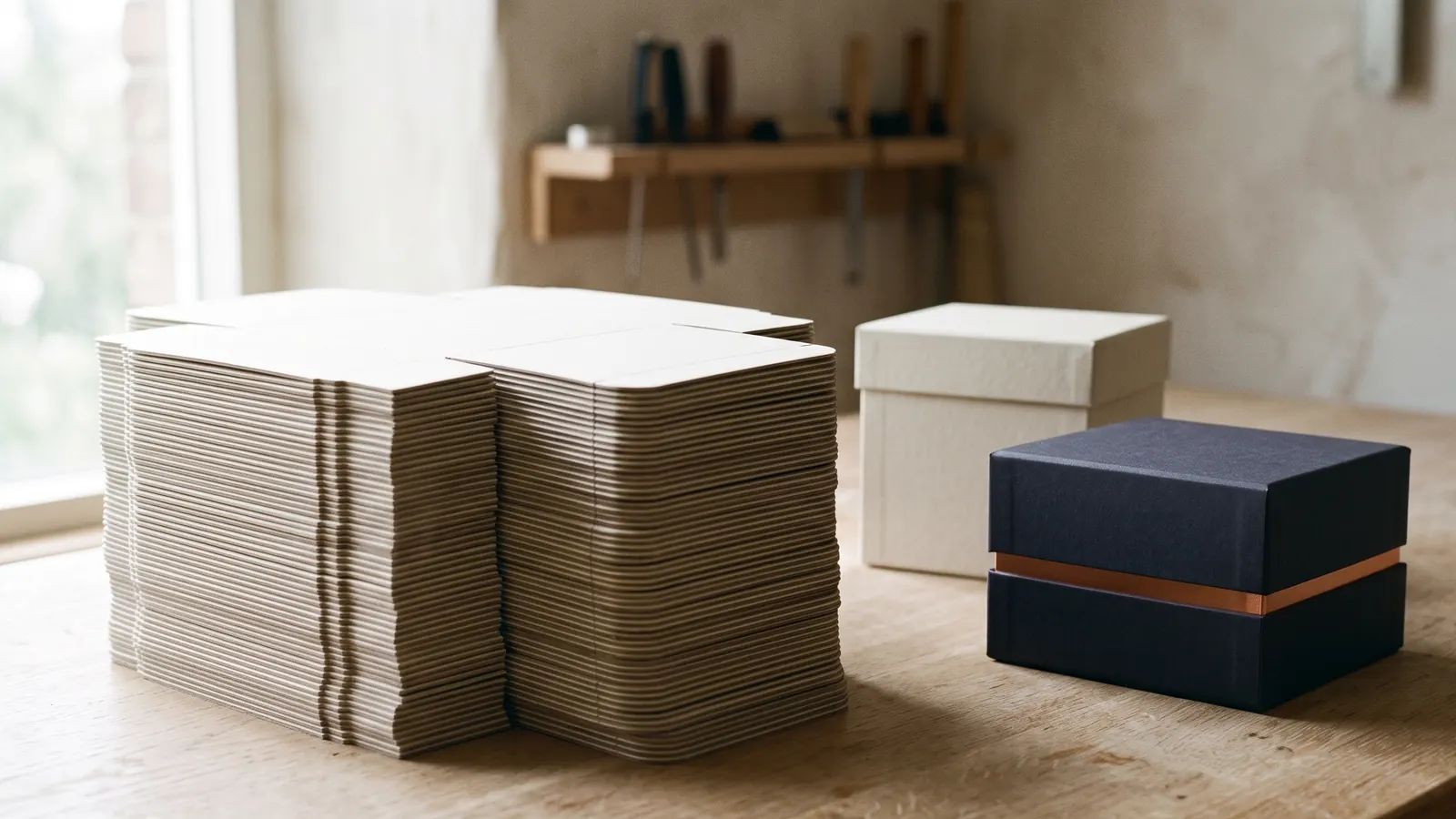
Reference
Paper weight and gsm: what the number means, and what it does not
Almost every packaging brief eventually arrives at a number: 300gsm, 350gsm, sometimes just "make it feel substantial". The number is useful and it is also routinely misread, because gsm describes how much a sheet weighs and not how thick it is. Those are different properties, they come apart regularly, and the gap between them is where a box ends up feeling thinner than the specification promised.
By the Luxel Pac team · 5 min read · Updated August 2026
What is gsm?
Gsm is grams per square metre: the weight of a single sheet one metre by one metre. A 300gsm board weighs 300 grams at that size. It is a measure of mass, which makes it a reliable way to compare two sheets of the same material and an unreliable way to compare two different ones.
It is the standard everywhere except North America, where paper is quoted in pounds per ream. Those pound figures are not directly comparable between paper types, because the ream size differs by grade, which is the main reason gsm has become the international default.
Does a higher gsm mean thicker paper?
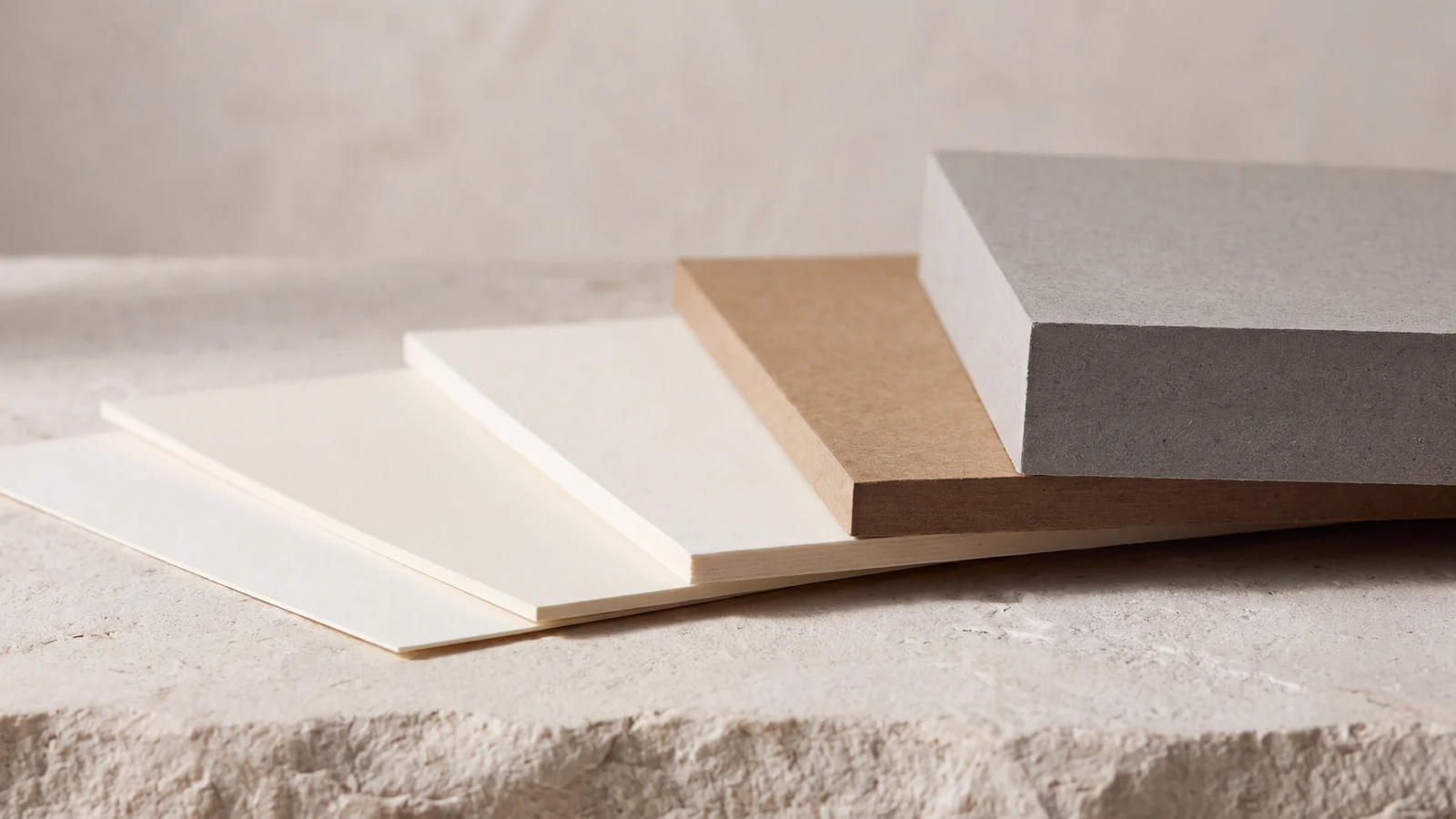
Not necessarily, and this is the single most useful thing to understand about the number. Gsm measures weight. Thickness is a separate property, called caliper, and two boards at identical gsm can differ noticeably in thickness because they differ in density.
A bulky, lightly compressed board holds air and feels substantial for its weight. A dense, heavily calendered board of the same gsm is thinner and smoother. Both are 300gsm. Only one of them feels like 300gsm in the hand.
The practical consequence: if what matters to you is how the packaging feels, gsm alone will not get you there. Ask for the caliper as well, in microns or millimetres, and ask to hold a sample. A specification written in gsm and approved on screen is the most common route to a box that arrives feeling flimsier than expected.
What is greyboard, and why is it measured in millimetres?
Greyboard is the dense, unbleached board that forms the structure of a rigid box, and it is specified in millimetres rather than gsm because thickness is the property doing the work.
A rigid box holds its shape because the board resists bending. That resistance comes from thickness, not from mass, so quoting it in grams would describe the wrong thing. Typical rigid box construction runs somewhere between about 1.5 and 3 millimetres depending on the size of the box and how solid it needs to feel, and a larger box needs thicker board simply to avoid bowing on the long panels.
The printed sheet wrapped around that structure is a separate specification, quoted in gsm, a far lighter paper chosen for how it prints and how it feels rather than for strength. So a rigid box has two paper specifications and they are measured in different units. That surprises people, and it is worth clarifying at quotation stage.
What is kraft paper?
Kraft is a pulping process, not a colour. The name comes from the German for strength, and the process leaves the fibres longer and stronger than the alternatives, which is why kraft is used where a bag or a box has to carry weight.
Unbleached kraft is the familiar brown. Bleached kraft is white and just as strong. So a white bag can be kraft, and asking for "kraft" when you mean "brown" is one of the more common briefing ambiguities we see. Say brown if you mean brown.
Which board goes with which packaging?
| Format | Material | Typically specified as |
|---|---|---|
| Rigid box structure | Greyboard | About 1.5 to 3 mm thickness |
| Rigid box wrap | Coated or uncoated art paper | A light gsm, chosen for print and feel |
| Folding cartons | Folding boxboard, SBS or duplex | Roughly 250 to 400 gsm |
| Luxury carrier bags | Kraft or art paper | Roughly 170 to 250 gsm |
| E-commerce mailers | Corrugated board | Flute grade, not gsm |
| Tissue and wraps | Lightweight paper | Well under 50 gsm |
The two lines worth noting are the ones that break the pattern. Corrugated is specified by flute grade rather than weight, because its strength comes from the fluted structure between the liners. And the rigid box appears twice, because the structure and the wrap are different materials measured in different units.
What about SBS, duplex and chipboard?
- SBS, or solid bleached sulphate, is a white board through its full thickness. It prints cleanly on both faces and is the usual choice where the inside of a carton is seen.
- Duplex board is white on one side and grey on the reverse. It costs less than SBS and is the sensible choice when only the outside is printed.
- Chipboard, in packaging, means recycled paperboard and is close to what British usage calls greyboard. In British construction the same word means particleboard, a wood product, which is a genuine source of confusion in international briefs.
What should you specify?
- The gsm or thickness, and say which unit you mean.
- The caliper as well as the gsm. On luxury packaging the feel is the point.
- Coated or uncoated, since it changes both how ink sits and how the surface feels. Our guide to Pantone colour matching covers what that does to your brand colour.
- Whether the reverse side is seen, which decides SBS against duplex.
- Recycled content, if it matters. It affects both the colour of the base board and how it takes ink.
- A physical sample of the actual board before production. Weight and thickness are numbers; substance is something you have to hold.
We specify board per project rather than working from a house standard, because the right weight for a 200 gram candle box and a 2 kilogram gift set are not the same number. Tell us what goes inside and how it should feel, and we will tell you what holds it.