Reference
Paper bag handles: the five types, how they attach, and which one gives way
Handles are the first thing a customer touches and the first thing that fails. They are also the part of a carrier bag where the price is decided, because the difference between a bag that costs a little and a bag that costs several times more is usually not the paper or the printing but whether a person had to thread something through it by hand. This is how each handle type is made and attached, what it will and will not carry, and where the money goes.
By the Luxel Pac team · 7 min read · Updated August 2026
What are the types of paper bag handles?
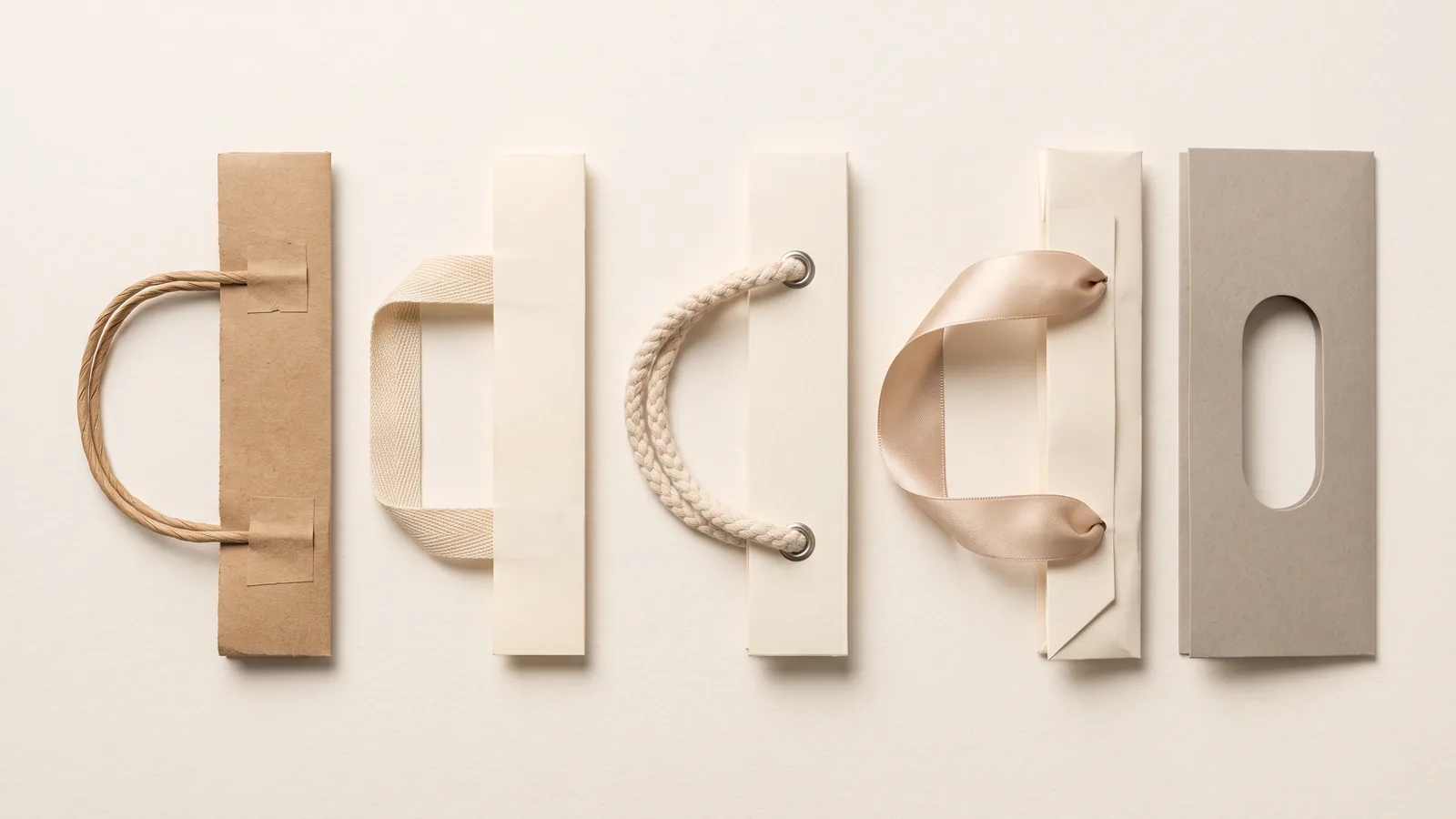
There are five in common use. Twisted paper, flat paper, cotton rope, ribbon and die cut, in roughly ascending order of cost for the first four.
| Handle | How it is fitted | Typical use |
|---|---|---|
| Twisted paper | Paper rope, glued to a reinforcement patch by machine | Retail and food, the highest volume option |
| Flat paper | Flat paper tape, glued by machine | Grocery and takeaway, flatter against the bag |
| Cotton rope | Threaded through eyelets or knotted inside, by hand | Boutique retail, fashion |
| Ribbon | Satin or grosgrain, threaded and knotted by hand | Fragrance, beauty, jewellery, gifting |
| Die cut | A shaped opening cut into the bag itself, no separate handle | Flat, lightweight items and short carry |
How is a paper bag handle attached?
Machine handles are glued to a reinforcement patch on the inside of the bag. Hand handles are threaded through the turned top and knotted or crimped behind it.
The reinforcement patch is the part nobody sees and the part that does the work. A twisted paper handle bonded straight to a single layer of paper will tear that layer out under load, taking a piece of the bag with it. Glued to a patch, the load spreads across a wider area and the failure point moves. A bag that fails at the handle almost always failed at the attachment, not at the handle itself.
Ribbon and rope work differently. They pass through the folded top edge, which means the top edge itself has to be able to carry the weight, which brings us to the part of the specification that matters most.
What is a turned top, and why does it matter?
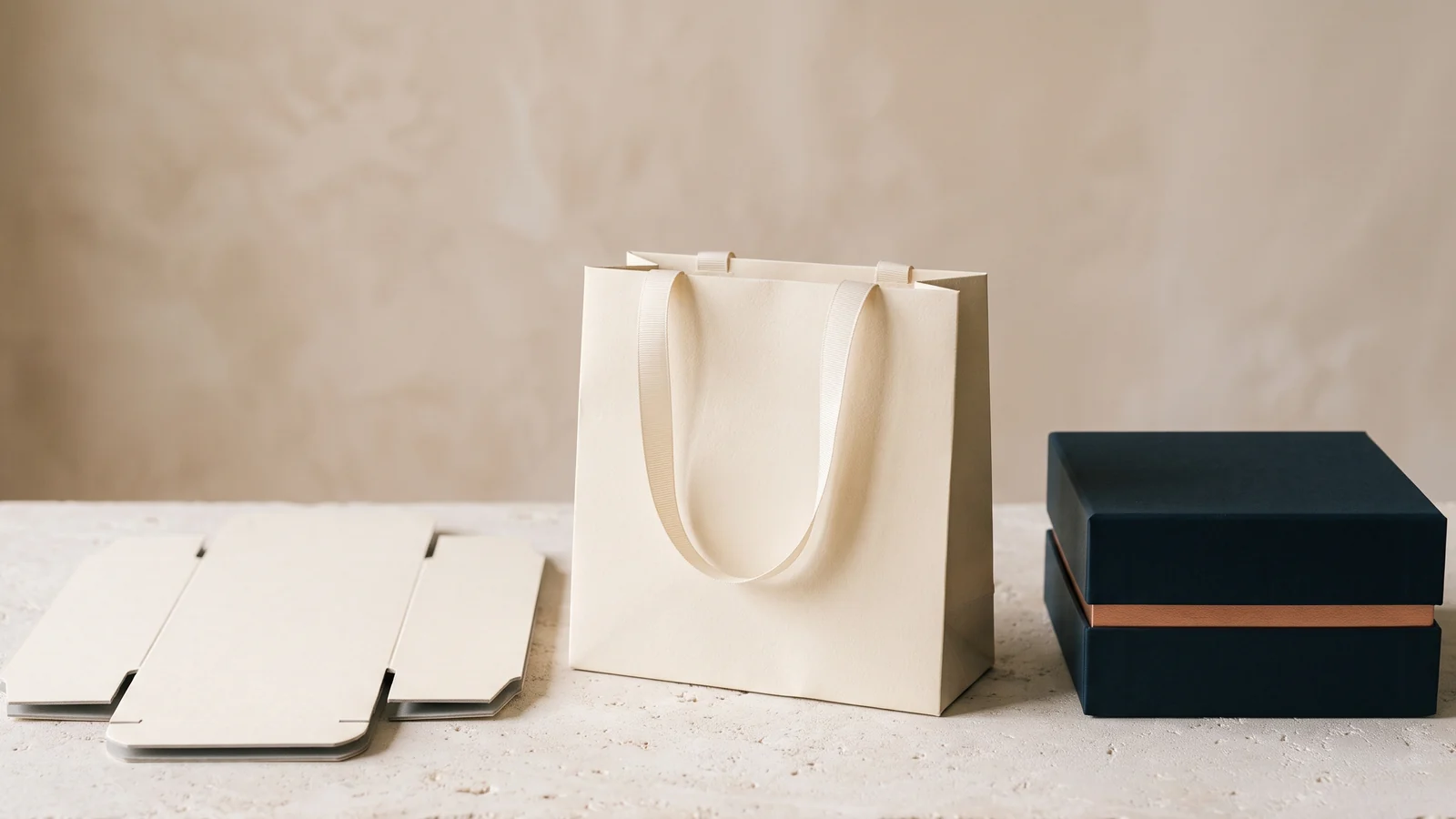
A turned top is the top edge of the bag folded back on itself, usually over a strip of card, to create a reinforced lip. It is what allows a rope or ribbon handle to carry anything.
Without it, an eyelet punched through a single thickness of paper is a perforation, and a perforation is where the paper will tear. With a turned top the load is carried by a folded, often card-lined edge, and the eyelet sits in something substantial. If you are specifying a rope or ribbon handle and the quotation does not mention a turned top, ask, because the difference is not cosmetic.
Which paper bag handle is strongest?
Cotton rope through a turned top, in most cases. Twisted paper on a well made reinforcement patch is close behind and costs considerably less.
We would rather give you the order than a load figure in kilograms, because real capacity depends on the paper, the reinforcement, the bag dimensions and how the weight sits inside it, and a published number would be wrong for most briefs. Any manufacturer quoting you a single load rating across a range of bags is quoting a marketing figure. Ask instead what the bag was tested at in your own size and material.
- Cotton rope with a turned top. The strongest common configuration, and comfortable in the hand under load.
- Twisted paper on a reinforcement patch. Strong, machine-fitted, and the best value by a distance.
- Flat paper. Similar construction to twisted, slightly less comfortable under weight, sits flatter for storage.
- Ribbon. Chosen for how it looks and feels, not for load. Satin is a decorative pull more than a carrying handle.
- Die cut. No attachment to fail, which is its advantage, but the load is limited by the paper around the opening.
Why do rope and ribbon bags cost more?
Because a person threads them. Twisted and flat paper handles are fitted by machine at speed; rope and ribbon are hand operations, and hand operations do not get cheaper with volume in the way machine operations do.
This is worth understanding before you plan a budget around a quantity break. On a machine-made bag, going from 1,000 to 10,000 units moves the unit price meaningfully, because the setup is amortised across more pieces and the machine simply runs longer. On a hand-threaded bag, ten times the quantity is close to ten times the threading, so the unit price flattens out early. Brands are often told that ordering more will bring the price down and then find that on this format it barely does.
The same logic applies across formats, and our guide to what luxury packaging costs sets out where volume pays and where it does not.
What gsm should a paper bag be?
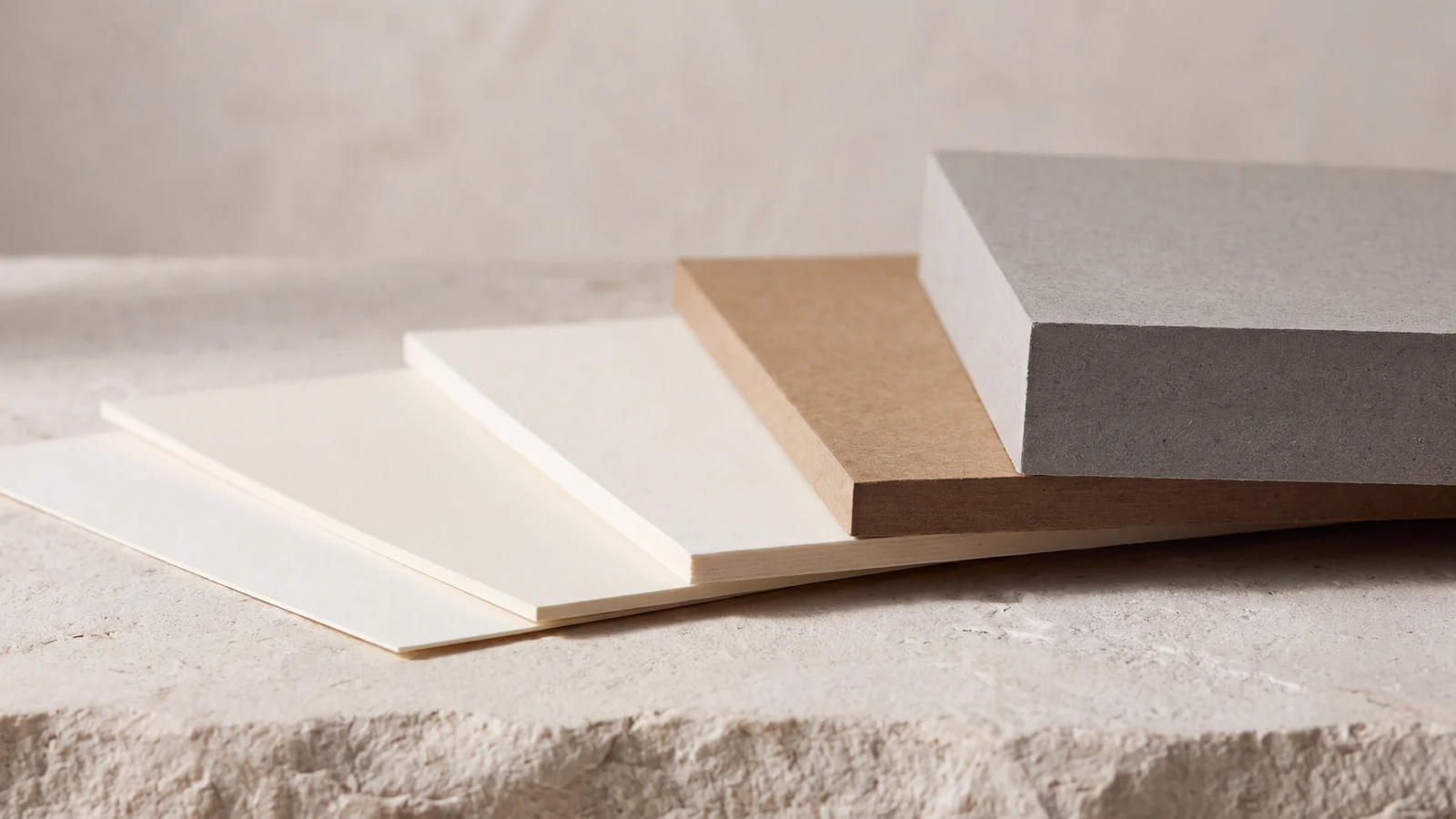
Carrier bags are commonly made in 120 to 250 gsm, with 150 to 210 gsm covering most retail work. Heavier is not automatically better.
Those are industry-typical ranges rather than rules, and the right number depends on the bag size and what goes in it. A large bag in light paper will buckle at the sides regardless of the handle; a small bag in heavy board is stiff, expensive and no stronger where it counts. Gsm is a measure of weight rather than thickness, which is a distinction that catches people out, and our guide to paper weight and gsm covers why two papers at the same gsm can feel completely different.
Lamination changes the picture again. A laminated bag resists moisture and scuffing and holds a printed finish better, and it also takes the bag out of the standard paper recycling stream. Our guide to sustainable luxury packaging covers which finishes do that and what the alternatives are.
What size should a paper bag be?
Size the bag to the product with enough clearance to lift it out, then check the base. The base depth is the dimension most often specified badly.
Bags are quoted as width by gusset by height, and the gusset is the base depth. A bag that is generous in width and shallow in the base will not stand up with a boxed product inside it, which is the most common complaint we hear after delivery. If the bag is carrying a rigid box, take the box dimensions and add clearance to the gusset first.
Handle drop matters too, and is easy to forget: a bag intended to be carried on the shoulder needs a longer drop than one carried in the hand, and the difference is noticeable to the customer even though it never appears in a brief.
What we would specify
- Twisted paper handles for anything above a few thousand units where the bag is doing a job rather than making a statement. The value is not close.
- Cotton rope with a turned top where the bag will be reused, which is most boutique retail.
- Ribbon where the bag is part of the gift and the contents are light. Specify it knowing it is a pull, not a load handle.
- A turned top on any threaded handle, without exception.
- A reinforcement patch on any glued handle, and ask to see it in the sample.
- Gusset sized from the product, not from the width.
- A physical sample carried loaded before you sign off the run. It takes a week and it is the only test that means anything.
We make carrier bags in paper, board and laminated finishes, with all five handle types, and we will tell you when the handle you have specified is not right for the weight you have described. A bag that fails on the walk to the car undoes the work everything else in the packaging was doing.