Reference
Sustainable luxury packaging: what is recyclable, and what quietly is not
Almost every brief now asks for sustainable packaging, and almost every supplier says yes. The honest position is more awkward than that, because the things that make luxury packaging feel luxurious are frequently the things that stop it being recycled. This is what actually happens to a finished box at end of life, which choices matter and which are decoration, written by a manufacturer who would rather you knew than found out later.
By the Luxel Pac team · 6 min read · Updated August 2026
What is sustainable packaging?
Sustainable packaging is packaging designed so that its materials, its manufacture and its disposal do less harm than the alternative. The term has no legal definition, which is why it is used so freely, and why the useful questions are narrower: what is it made from, what can be done with it afterwards, and what is stopping that from happening.
Is packaging recyclable?
The board almost always is. The finish frequently is not, and the finish is what decides the outcome.
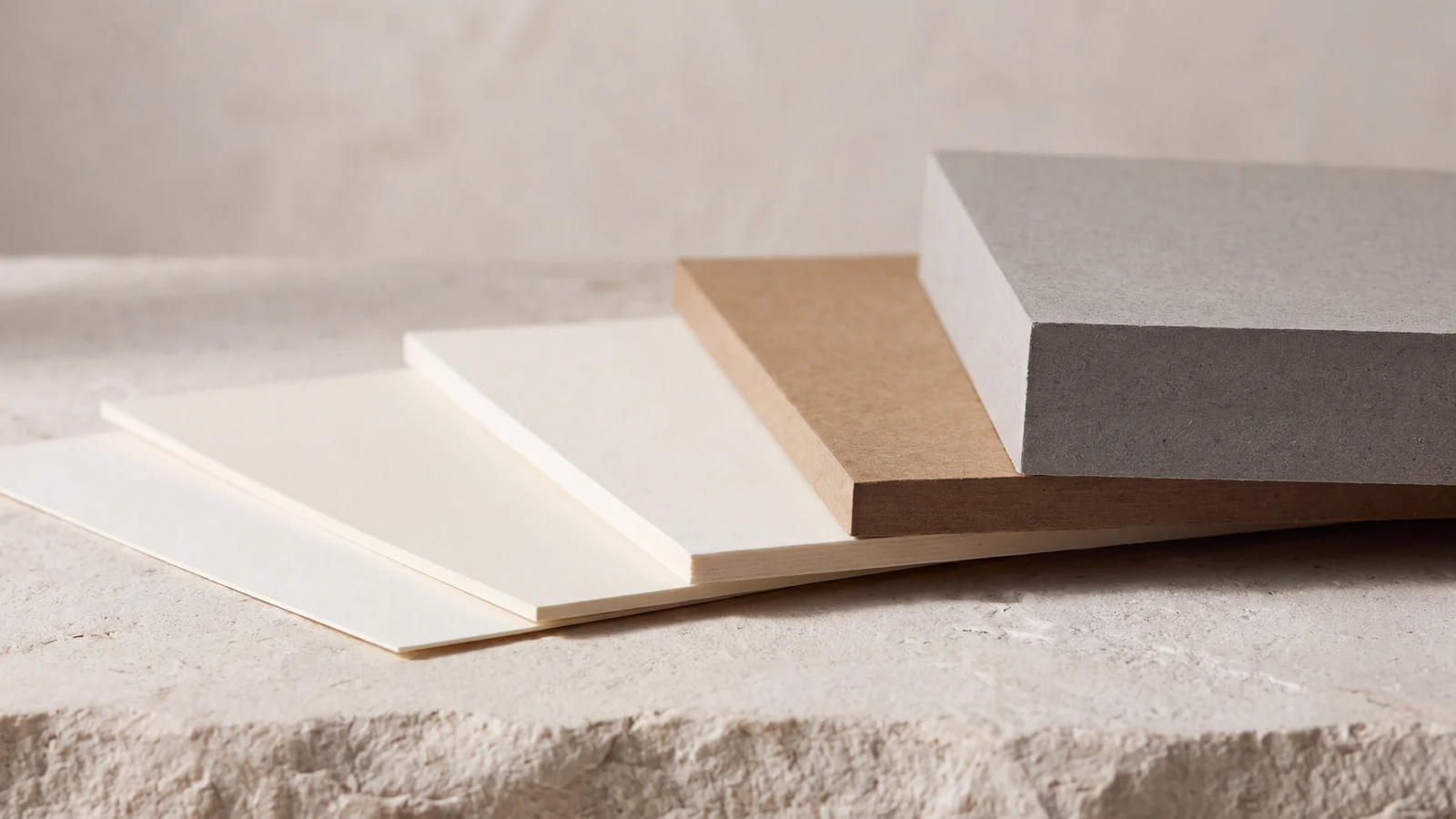
Paperboard is one of the most recycled materials in the world, and the fibre can go round five to seven times before it becomes too short to reuse. But a recycling facility does not see board, it sees an object, and if that object is coated in plastic film or carries components it cannot separate, it comes out of the stream. A beautiful rigid box can be 95 percent paper by weight and still be rejected because of the other 5 percent.
What makes luxury packaging hard to recycle?
Five things, in roughly the order they cause problems:
- Soft-touch and gloss lamination. These are plastic films bonded to the board. They give the surface its feel and they are the most common reason a luxury box is rejected by a standard kerbside stream. A water-based soft-touch coating achieves a similar hand without the film.
- Magnets. A magnetic closure is a metal component glued inside the board. It has to be removed by hand, and it will not be.
- Ribbon and cord. Polyester ribbon is a different material entirely, and a satin pull glued into a lid is a contaminant. Cotton or paper ribbon changes that.
- Foil. A small foil-stamped logo is generally tolerated in the fibre stream. Foil across a whole panel is not, because the metallised layer does not break down with the fibre.
- Adhesives and coatings in quantity. Small amounts wash out. Heavy plastic coatings do not.
None of this makes those finishes wrong. It makes them a decision. A brand that wants a soft-touch magnetic box can have one, and should know it is choosing an object that will be kept or binned rather than recycled. A brand that wants the box recycled should choose the finishes that allow it.
Recycling rules also differ by country and by facility, so the safe question to ask is not whether a box is recyclable in principle but whether it is accepted where your customers live.
What is FSC certified?
FSC certification means the fibre is traceable to forests managed to the Forest Stewardship Council standard, verified through a chain of custody from the forest to the printer.
The detail worth knowing is that certification travels with the supply chain, not with the product. A facility has to hold chain of custody for the claim to be valid on your box, which is why we say our facilities are FSC certified rather than saying our boxes are. If a supplier claims FSC, ask for the certificate number and check it on the FSC public database. It takes a minute and it is the only way to know.
Recyclable, biodegradable, compostable: what is the difference?
| Term | What it means | What it requires |
|---|---|---|
| Recyclable | The material can be reprocessed into new material | A collection stream that accepts it, and no contaminants |
| Biodegradable | It breaks down through biological action, eventually | No fixed timeframe, which is why the word means little on its own |
| Compostable | It breaks down into non-toxic matter within a defined period | Often an industrial composting facility, not a garden heap |
Recyclable is the one that matters most for paper packaging, because the collection infrastructure already exists nearly everywhere. Compostable is meaningful only where industrial composting is available to the buyer, which in most markets it is not.
What is moulded pulp?
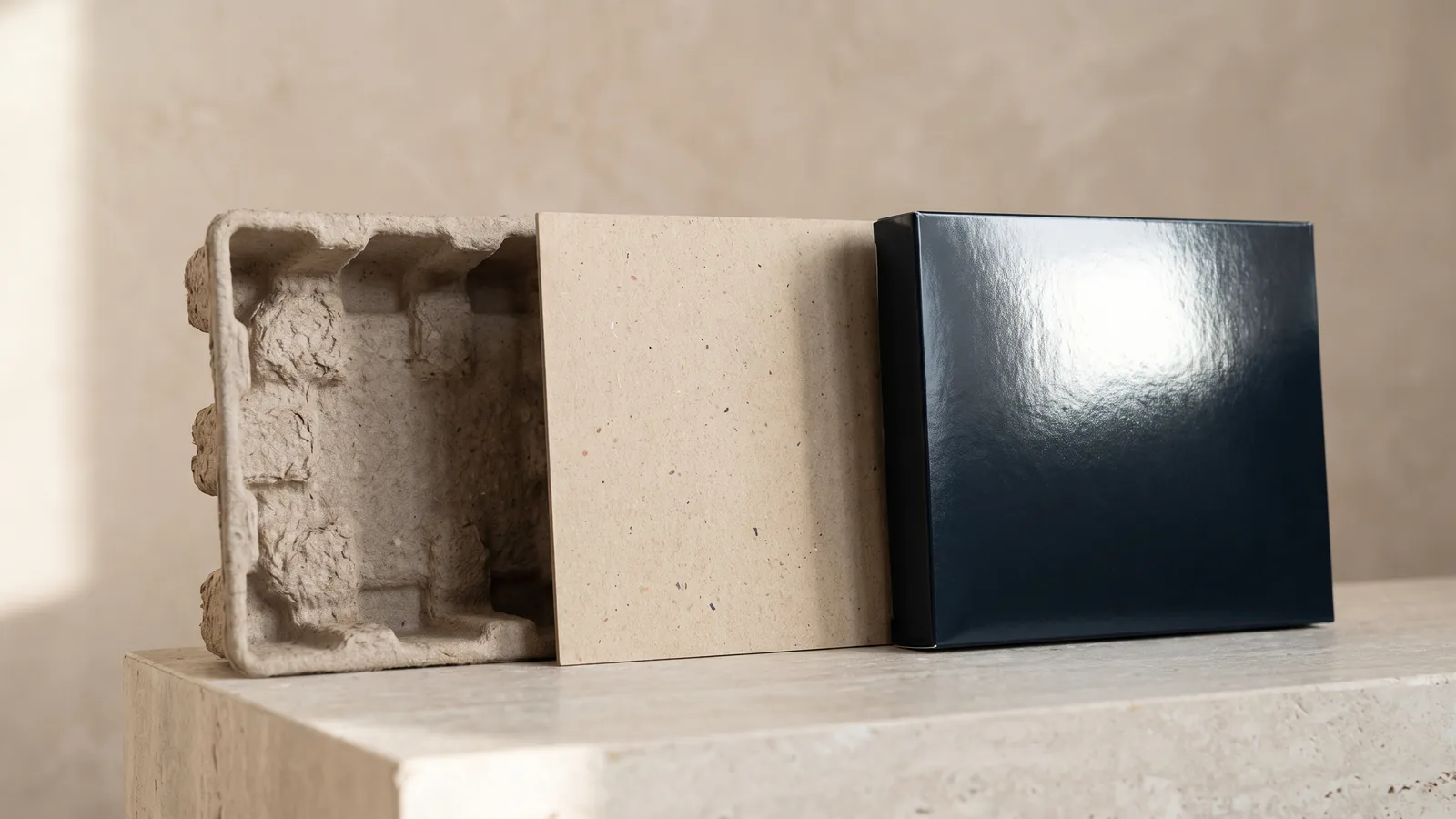
Moulded pulp is recycled paper fibre mixed with water, pressed into a shaped mould and dried. It produces the fitted trays and inserts that hold a product in place, and it is the most straightforward replacement for the plastic or foam insert inside a gift box.
It recycles with the rest of the paper stream, it is made from waste fibre to begin with, and it takes a surprisingly refined form. The limitation is precision: it holds shape well but cannot match the tolerances of a thermoformed plastic cradle, so a tightly fitted bottle sometimes needs a different answer.
What we would change first
- Swap plastic lamination for a water-based coating. The largest single gain, and the least visible compromise.
- Replace a plastic or foam insert with moulded pulp. The second largest, and it often costs less.
- Choose paper or cotton ribbon over polyester where a pull is needed.
- Keep foil to a mark rather than a panel. Restraint reads as more expensive anyway.
- Specify FSC certified board and ask for the certificate number.
- Size the box to the product. The most sustainable material is the one not used, and an oversized box also costs more to ship, because freight is charged on the space it occupies. Our guide to shipping packaging from China covers what that is worth.
We make packaging in FSC and ISO certified facilities and we work in moulded pulp, recycled boards, plant-based inks and water-based coatings. We will also tell you when a finish you want is going to take the box out of the recycling stream, because a brand that discovers that after launch has a harder problem than one that chose it deliberately.
Ready to start?