Reference
Folding cartons: the board, the styles, and why they get discounts rigid boxes do not
A folding carton is the format most brands meet first and understand least. It arrives flat, it is made on a machine, and almost every decision about it was taken before anyone looked at the artwork: which board, how thick, and how the ends close. Those three choices set the cost, the shelf presence and how fast your product can be packed. This is what each one means.
By the Luxel Pac team · 8 min read · Updated August 2026
What board are folding cartons made from?
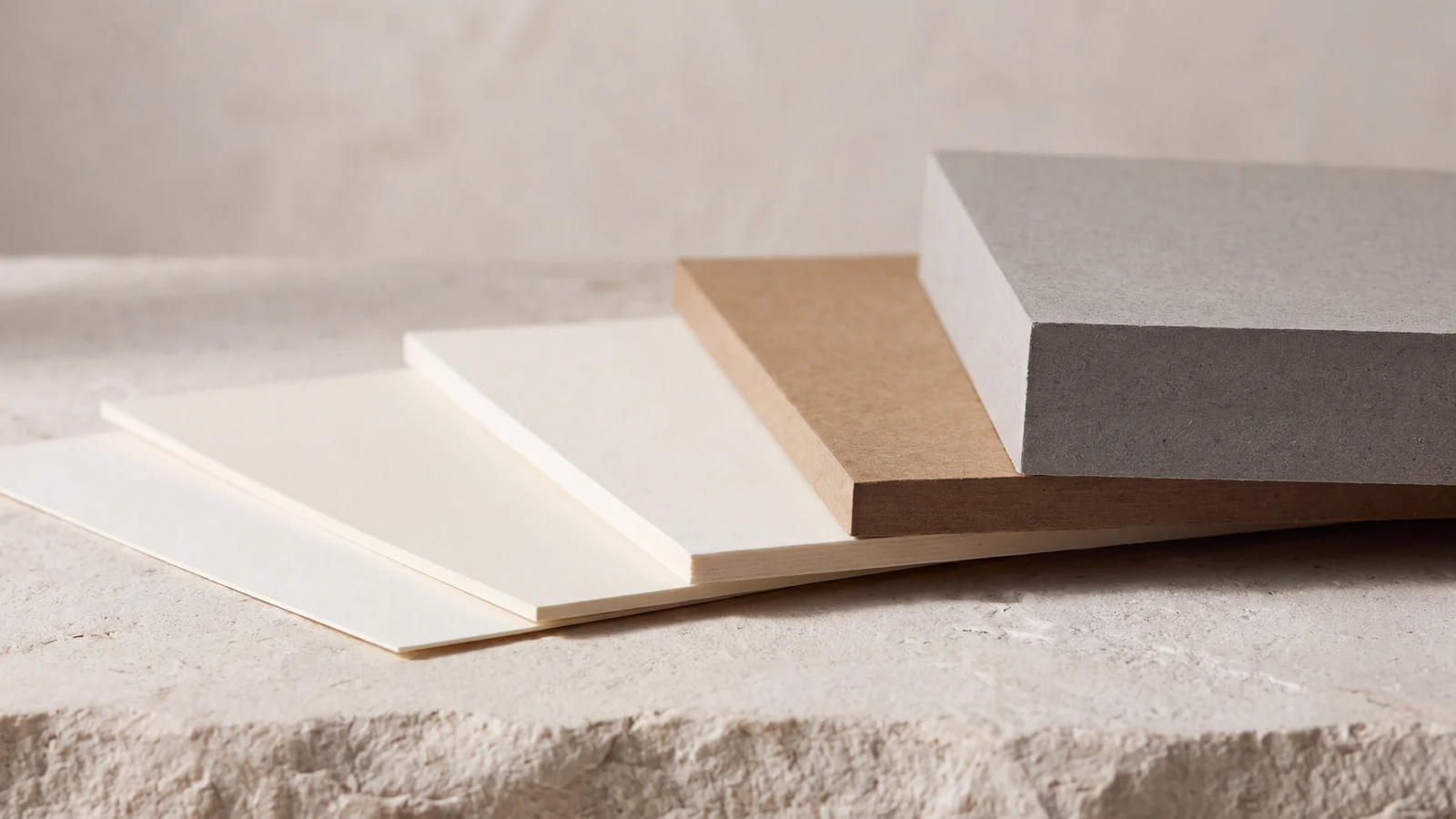
Four families cover almost everything. They differ in what the fibre is and how many layers it has, and that decides both the print surface and the price.
| Board | What it is | Where it belongs |
|---|---|---|
| SBS, solid bleached sulphate | Virgin bleached fibre, white the whole way through | Cosmetics, pharmaceutical, anything where the inside of the carton is seen |
| FBB, folding box board | Bleached outer layers with a mechanical pulp centre, so it is bulky for its weight | The European workhorse for beauty and confectionery: stiff, lighter than SBS at the same thickness |
| CUK, coated unbleached kraft | Unbleached kraft fibre, brown through, coated on one side | Strength-led work and anything wanting a visible natural fibre |
| WLC, white lined chipboard | Recycled fibre with a white liner, grey on the reverse | Dry goods and secondary packaging where the back is never seen |
The practical difference between SBS and FBB is not quality, it is bulk. FBB gets its stiffness from a low-density middle layer, so at the same caliper it weighs less and costs less than SBS while feeling equally rigid in the hand. SBS earns its price when the carton is opened and the reverse of the board is on show, because it is white on both sides rather than white on one.
How thick should a folding carton be?
Most folding cartons sit between 250 and 450 gsm. Below about 250 the carton feels flimsy in the hand and creases unpredictably. Above about 450 it stops behaving like a folding carton: the creases fight back, the corners bulk, and a different construction serves you better.
Board is specified two ways and they are not interchangeable. Grammage, in gsm, is weight per square metre. Caliper, in microns or in points, is thickness. Two boards at the same gsm can differ noticeably in caliper, which is exactly the SBS against FBB difference above, so a specification that names only gsm has not fully described the board.
What are the main folding carton styles?
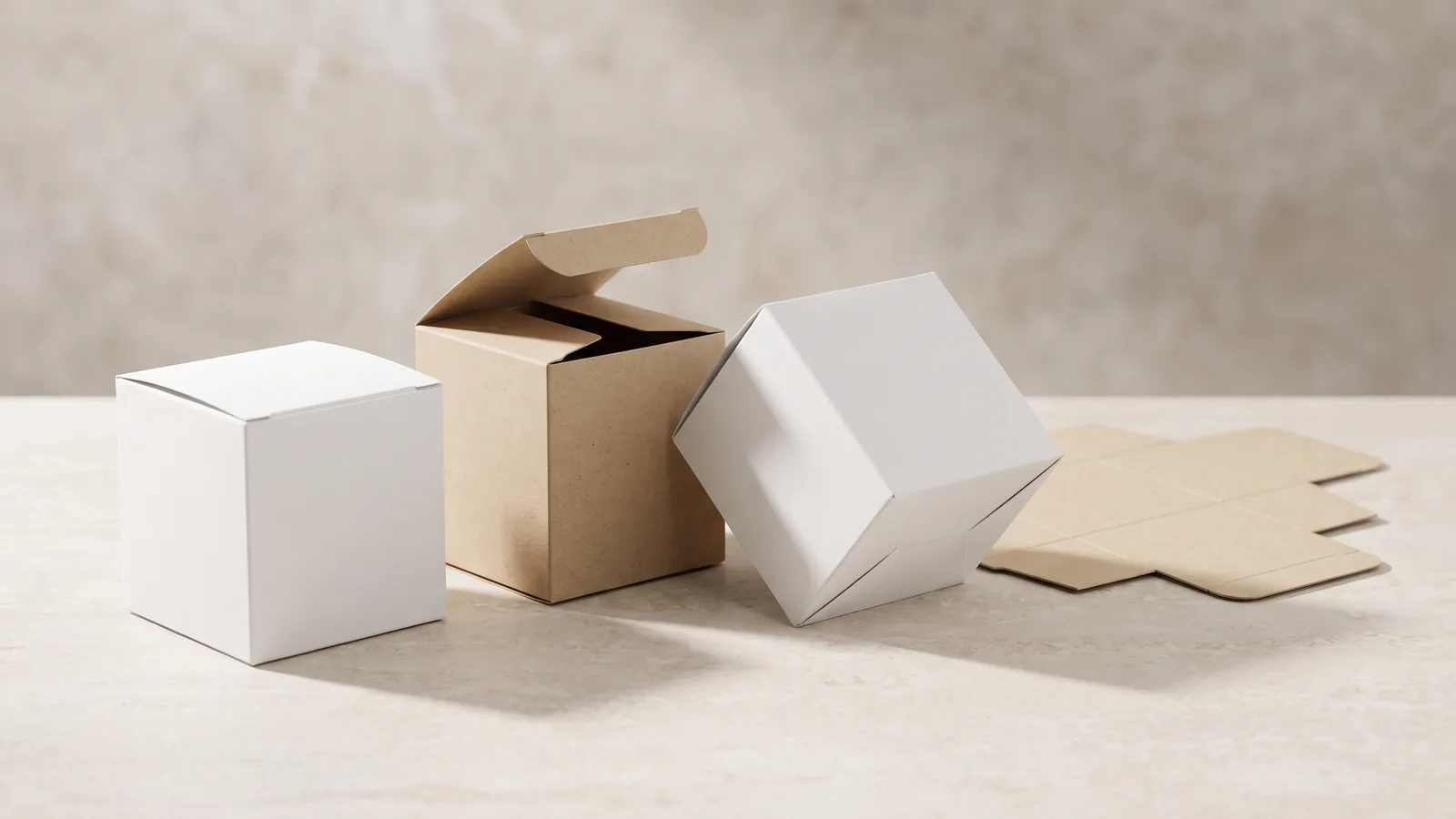
Four closures cover almost every carton made. The choice is a trade between how it looks on a shelf, how much board it uses, and how quickly it can be packed.
| Style | How it closes | Trade-off |
|---|---|---|
| Straight tuck end | Both tuck flaps hinge from the back panel, so no flap edge shows on the front | The cleanest front face. Uses slightly more board than a reverse tuck |
| Reverse tuck end | Top flap hinges from the back, bottom from the front | Nests more efficiently on the sheet, so it is the cheaper of the two tucks |
| Crash lock bottom | The base is pre-glued and locks itself when the carton is squared | Fastest to pack and strongest base. Costs more board and a gluing pass |
| Seal end | Both ends glued shut on a packing line | For high-speed automated filling. Needs the line to justify it |
Straight tuck or reverse tuck: which should you choose?
If the carton faces the customer on a shelf, straight tuck. Both flaps hinge from the back, so the front panel is unbroken and the artwork runs across it without a tuck line interrupting it.
If the carton is going into another box, or the front is not the selling face, reverse tuck. Reverse tucks nest more tightly when the dieline is stepped and repeated across the sheet, so more cartons come off the same area of board. That is the whole of the price difference, and on a long run it is worth having.
Crash lock is a different decision and it is about labour, not looks. A tuck-end carton has to be assembled and its base folded closed by whoever is packing it. A crash lock base opens and locks in one motion. It costs more per carton and it saves time on every unit packed, so it pays for itself somewhere around the point where someone is packing them by hand all day.
Why do folding cartons get volume discounts that rigid boxes do not?
This is the part that surprises people, and it is the single most useful thing to understand about carton pricing.
A folding carton is printed on a press and cut on a die-cutter. Almost all of its cost that is not board is set-up: making the printing plates, cutting the die, and the make-ready time to get the press running correctly. That cost is the same whether you print 5,000 cartons or 50,000, so it divides across the run. Double the quantity and the set-up cost per carton halves.
A rigid box is different. The board is cut, the wrap is printed and cut, and then a person wraps the board by hand and turns the edges. That labour happens once per box, every box, and it does not get cheaper because you ordered more of them. The tooling amortises, the handwork does not.
So the same question, asked about two formats, has two different answers. On folding cartons the volume break is real and worth negotiating. On rigid boxes and on hand-assembled carrier bags it is much flatter, because the labour per unit does not fall. So when you are quoted a discount, ask which part of the cost is coming down: set-up, board, or labour. The answer tells you what you are actually buying.
Why is the minimum order for folding cartons higher?
For the same reason. Our minimum on folding cartons is 10,000 units, against 1,000 on rigid boxes, and that ratio looks backwards until you know where the money sits.
A rigid box at 1,000 units is viable because most of its cost is labour that scales linearly, so a small run is simply a small amount of labour. A carton at 1,000 units is not, because you would be paying for plates, a die and a press make-ready and then dividing them across a thousand units. The unit price stops making sense long before the machine does. The higher minimum is not a preference, it is where the format starts being the economical choice.
What to specify
A carton specification that will not need chasing contains these:
- Board family and grammage, and caliper as well as gsm, because the two are not interchangeable.
- Closure style, and which panel is the selling face if it is a tuck end.
- Whether anything is being packed by hand or on a line, because that decides crash lock against tuck.
- Internal dimensions taken from the product, not external dimensions taken from an existing carton.
- Any food contact, so the board and the inks are specified for it from the start rather than changed later.
- The quantity you actually expect to run, so the volume break is priced into the first quote rather than discovered at reorder.
We make folding cartons in SBS, FBB, kraft and recycled boards, in all four closure styles, from 10,000 units. If your quantity sits below that, say so early: a rigid box or a different construction is often the better answer at that scale, and it is a cheaper conversation to have before the dieline than after it.