Formats
The book box: a rigid box built like a hardcover
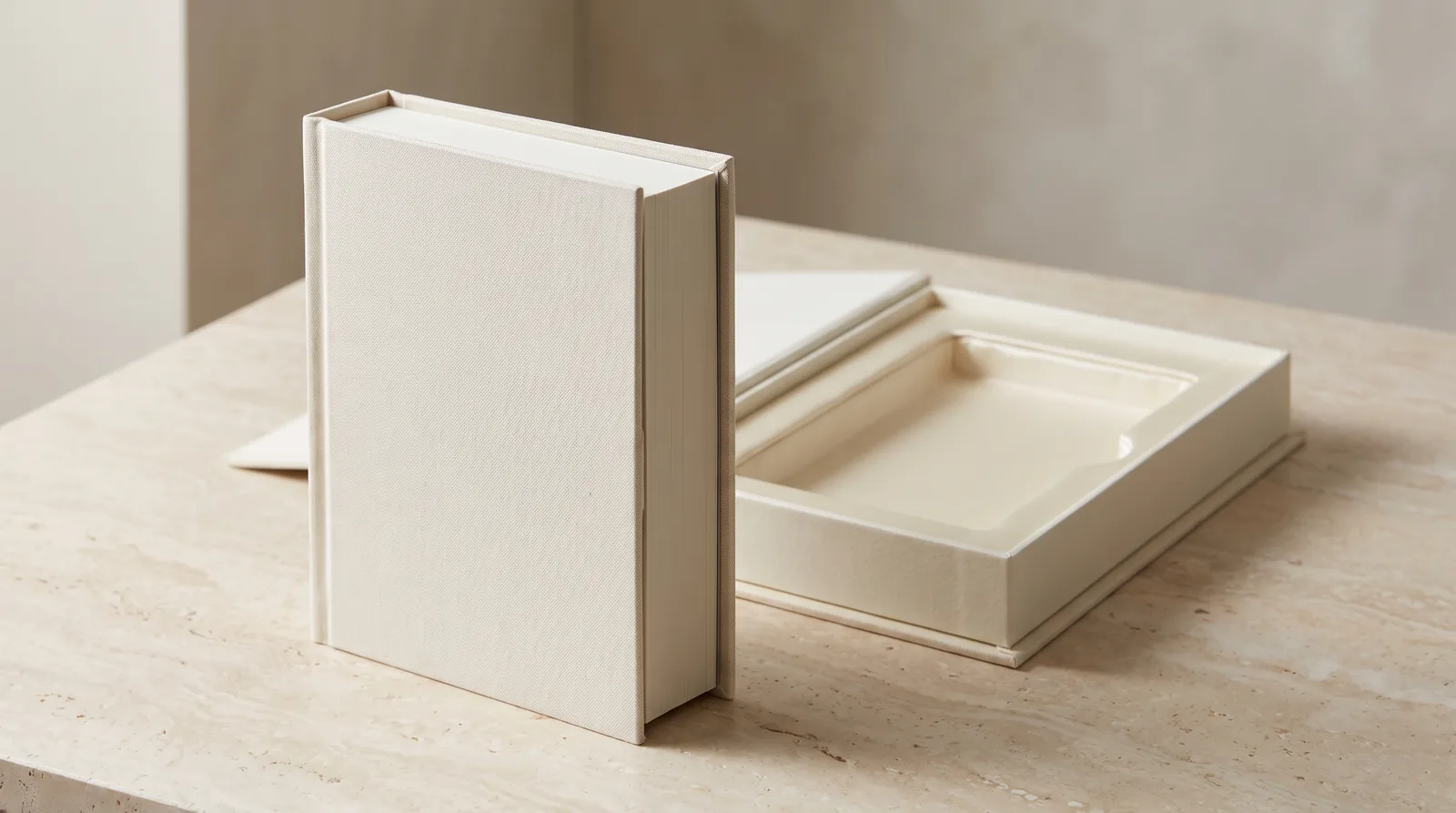
Closed, it is taken for a bound volume. Opened, the cover swings back and the product is staged inside a fitted well. The book box is a rigid box built in the proportions of a hardcover, and it is one of the few packaging formats a customer puts on a shelf instead of in a bin. Here is how it is made, what it costs, and when it is the right call.
By the Luxel Pac team · 6 min read · Updated September 2026
What is a book box?
A book box is a rigid box shaped like a hardcover book. It has a spine, a squared fore-edge, a wrapped cover and, in most builds, a magnetic clasp concealed in the edge so nothing interrupts the surface. The cover opens on a hinge rather than lifting off, and the interior is fitted to hold the product still. It is also sold as a book-shaped box, a faux book box, or a book-style presentation case, and all four names describe the same construction.
Why brands choose it over a standard rigid box
A lidded rigid box is opened once and set aside. A book box carries a second idea before it is even touched, because the shape borrows from libraries, archives and rare editions. That buys three things a plain box does not:
- A hinged reveal, which reads as an event rather than an unpacking.
- A shape that shelves, so the box stays visible in the customer’s home long after the purchase.
- A natural fit for limited editions, collector sets and anything presented as a gift.
It is not the right answer for everything. The hinge and the concealed clasp add hand assembly, so the format costs more per unit than a plain magnetic-lid box of the same size, and it suits products that photograph well lying flat rather than deep or irregular ones.
| Book box | Magnetic-lid rigid box | |
|---|---|---|
| Minimum order | 1,000 units | 1,000 units |
| Lead time | 4 to 6 weeks | 4 to 6 weeks |
| Relative unit cost | Higher, from the hinge and hand assembly | Baseline |
| Opening | Hinged cover, like a book | Lid lifts away |
| Best for | Gifting, collector and limited editions | Launches, everyday premium |
Materials and construction
The body is thick greyboard, the same base as any rigid box, cut and formed into a case with a spine. The wrap decides the character:
- Bookbinding cloth and textured papers, for the look of a publisher’s binding.
- Faux leather or grained paper, for the weight of an older volume.
- Specialty art papers, for a graphic and contemporary cover.
- A magnetic clasp, ribbon pull or tuck flap, set into the fore-edge and hidden.
The interior takes the same care as the cover. A precision-cut insert, satin flocking or a wrapped tray holds the product without play, so nothing shifts when the cover opens.
The finishes that make the cover
A book box cover is treated the way a fine binding is treated:
- Hot foil in gold, silver or copper, for a title or a monogram on the cover or spine.
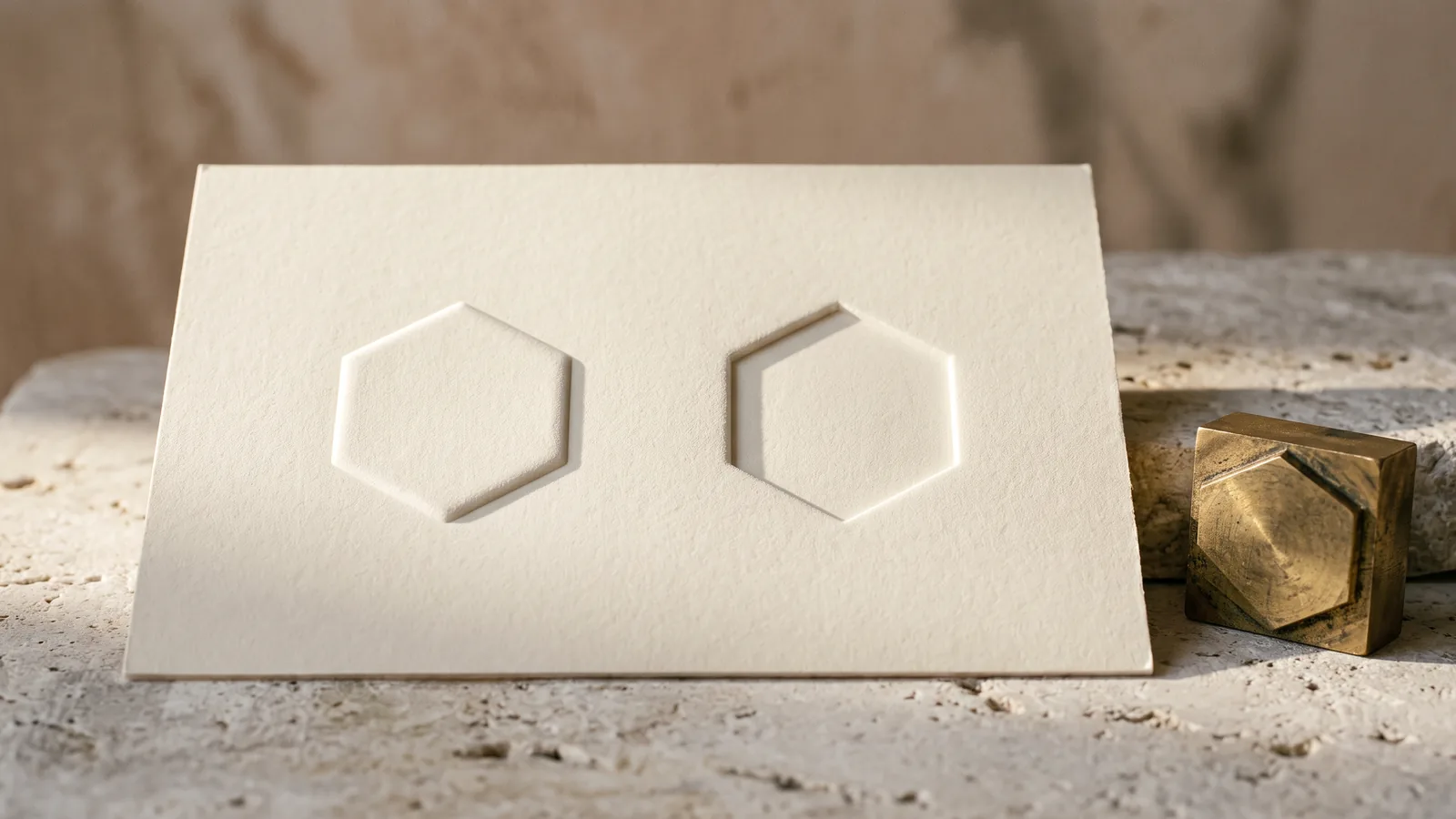
- Blind embossing or debossing, for relief without colour.
- Gilt edging on the fore-edge, which reads as the page block of a real book.
- Soft-touch lamination, matte or textured, for the hand-feel of cloth.
What it suits
The format earns its cost where the product is already an occasion: fragrance launches and discovery sets, fine jewellery and watches, spirits, and corporate or seasonal gift editions. It also works for brands that ship a small number of high-value units and want the packaging to survive as an object.
Minimums, lead time and budget
A book box carries the same minimum as any of our rigid boxes, 1,000 units, and the same 4 to 6 week production window. Cost per unit sits above a plain magnetic-lid box of the same dimensions, because the spine, the hinge and the concealed clasp are hand-assembled steps. The variables that move the price most are size, the wrap material, and the complexity of the interior fitting, in that order. Sea freight from China to the Gulf runs 3 to 4 weeks on top of production.
Frequently asked questions
What is a book box?
A rigid box built in the proportions of a hardcover book, with a spine, a squared fore-edge, a wrapped cover that opens on a hinge, and a fitted interior. It is also called a book-shaped box or a faux book box.
How is a book box different from a normal rigid box?
The construction quality is the same. The difference is the shape and the opening: a book box has a spine and a hinged cover with a clasp concealed in the fore-edge, where a standard rigid box has a lid that lifts away.
What is the minimum order for a book box?
1,000 units, the same minimum as our other rigid boxes, with a 4 to 6 week production window. Sea freight to the Gulf adds 3 to 4 weeks.
Does a book box cost more than a standard rigid box?
Per unit, yes, at the same size and materials. The spine, the hinge and the hidden clasp are hand-assembled steps that a lift-off lid does not need. Size, wrap material and interior fitting drive the difference more than the format itself.