Fragrance & Beauty
Rigid boxes with custom inserts for cosmetics
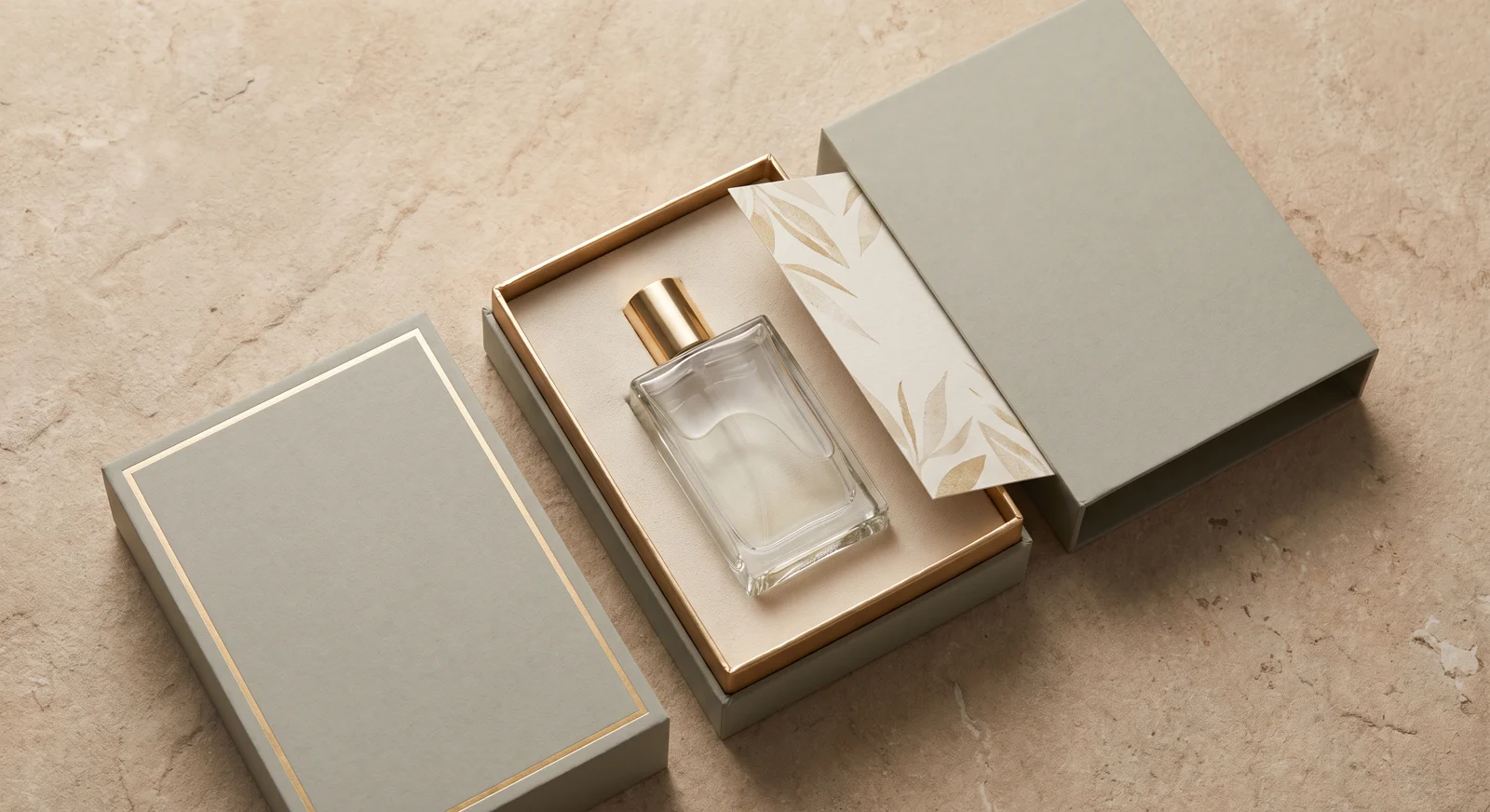
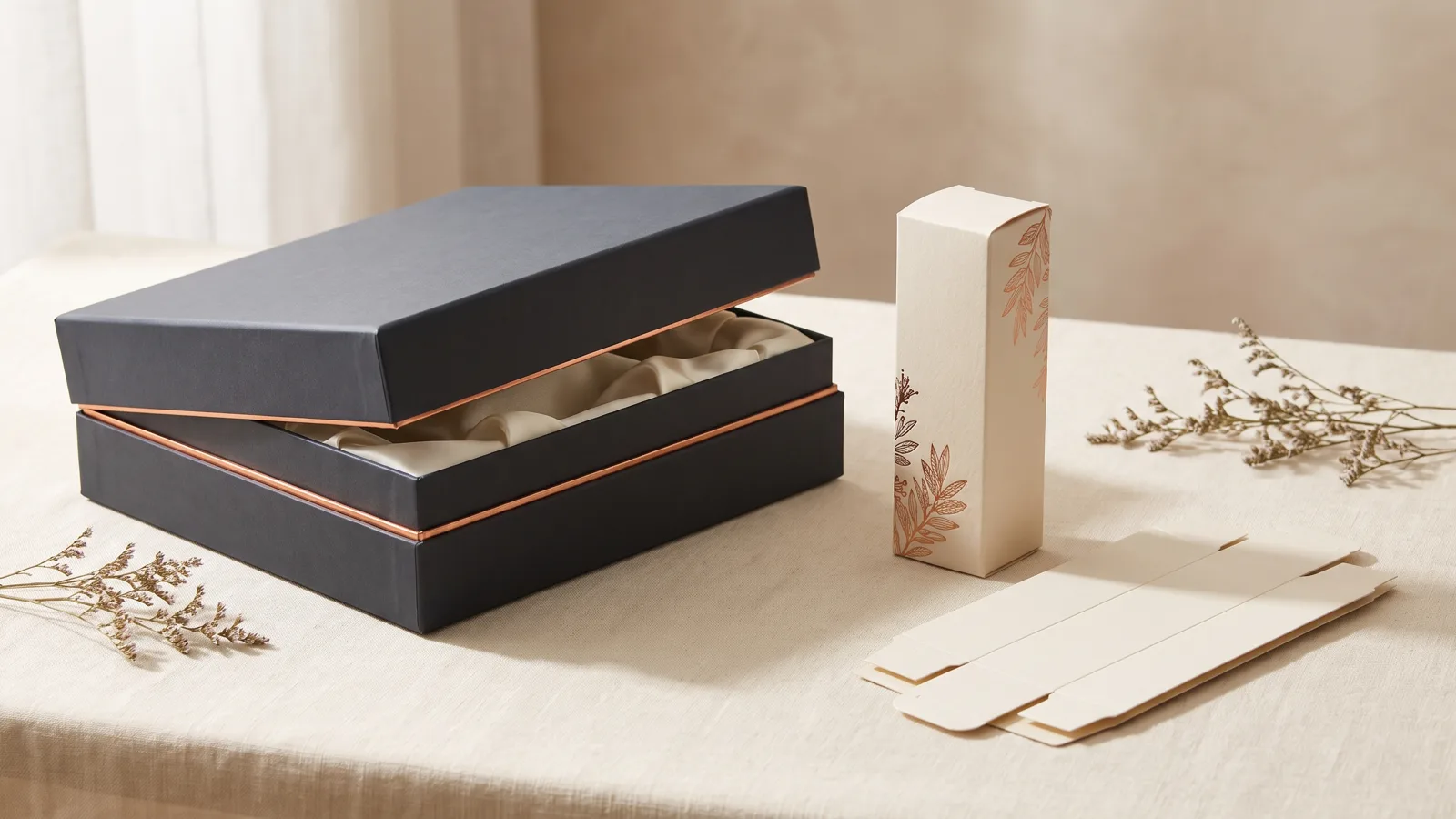
Cosmetic rigid boxes and the trays inside them, from 1,000 units, made in China in 4 to 6 weeks. A box is only as good as its tray: fit the cavity loosely and a serum bottle arrives on its side, a dropper works free, and the customer opens a box that rattles. We build the box and the insert as one piece of work. Here is how the four insert materials differ, which one suits a dropper bottle, and what we need from you before we can quote.
By the Luxel Pac team · 6 min read · Updated September 2026
What is a custom insert in a rigid box?
An insert is the fitted layer that holds the product still inside the box. It is cut or moulded to the outline of what it carries, so the bottle sits at one height, faces one way, and stays there through a courier network. In the United States the outer box is also called a setup box, and the insert a tray or a fitment. All three words describe the same part.
The insert does more than protect. It sets the order in which the box is read: what the customer sees first, what has to be lifted out before the next thing appears, and whether the arrangement still looks deliberate once the first piece is gone.
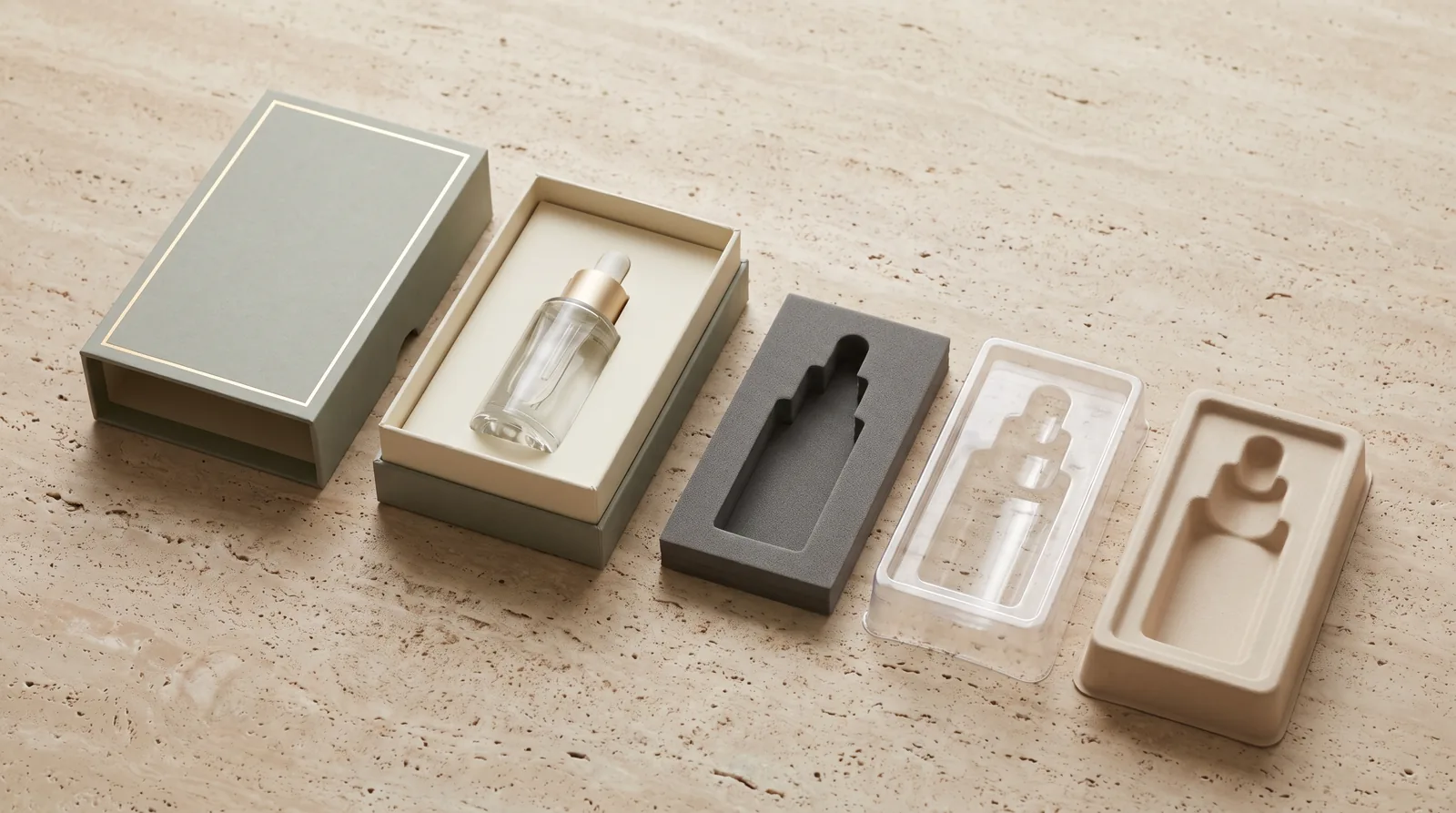
The four insert materials, and what each one suits
| Insert | How it is made | Best for | Worth knowing |
|---|---|---|---|
| Foam | Die-cut from EVA or polyethylene foam, flocked or left plain | Heavy glass, droppers, irregular shapes | The tightest grip of the four. Not recyclable in most kerbside streams. |
| Thermoformed tray | PET or PS sheet heated and pressure-formed over a mould | Multi-piece sets and precise repeated cavities | Crisp edges and a moulded look. Carries its own tooling cost. |
| Board tray | Die-cut and folded from paperboard or corrugated, wrapped to match the box | Brands that want the whole pack in one material | Recycles with the box. Less grip than foam under heavy glass. |
| Bagasse tray | Moulded from sugarcane fibre, the residue left after pressing | Sustainability-led ranges and refill programmes | Compostable, matte, with a soft fibrous surface. |
None of the four is the right answer on its own. The choice follows the weight of the product, how many pieces share the box, and what the brand has committed to on materials. A 30ml glass serum bottle with a dropper is heavy for its size and top-loaded, which narrows the field quickly.
Which insert suits a dropper or serum bottle?
For a single glass bottle with a dropper top, foam and thermoformed trays both hold well, and they fail differently. Foam grips the body of the bottle along its whole height, so it absorbs a drop better and forgives small variations between production batches of glass. A thermoformed tray holds the bottle at defined points and looks sharper, but it is cut to one exact dimension, so the bottle you sample with has to be the bottle you ship with.
If the range is likely to change bottle supplier, or the glass tolerance is loose, foam is the safer specification. If the box carries a set, a bottle with a carton and a sachet for instance, a thermoformed tray presents it better because each cavity can sit at its own depth.
Dropper height is the measurement that catches most projects out. The bottle is quoted at one height and the dropper adds ten to fifteen millimetres above the neck, which is what actually sets the depth of the box. Send us the height with the dropper fitted, not the bottle alone.
What we need from you before we can quote
A quote for a fitted box is only as accurate as the dimensions behind it. Six things move the number, and the first three are the ones that hold projects up:
- The product itself, or a drawing with length, width and height, including the closure at its tallest point.
- How many pieces share the box, and whether they sit side by side or stacked.
- The quantity, so the insert method can be matched to the run.
- Your material position, if the brand has committed to plastic-free or compostable.
- The finish on the outer box, since foil and lamination are specified with the wrap, not after it.
- The date you need stock in hand, which decides whether the balance travels by sea or by air.
Artwork can follow. The structure, the dieline and the insert are settled first, and the dieline we return is what the artwork is drawn onto.
Minimum order, lead time and where they are made
Our minimum for a rigid box with a fitted insert is 1,000 units, the same as any of our rigid boxes. Production runs 4 to 6 weeks from the moment you approve the sample, and a pre-production sample takes about 2 weeks before that. Everything is made in FSC and ISO certified facilities in China, supervised end to end, and the company you contract with is in the United Arab Emirates.
Freight sits on top of production. Sea freight to the United States runs 7 to 9 weeks, to Europe 4 to 5 weeks, and to the Gulf about 3 weeks. Air cargo takes about two weeks and carries real volume, so a launch quantity can travel by air with the balance following by sea.
Who owns the tooling and the artwork
You do. Dielines, thermoforming moulds and foil blocks made for your project are yours, and your artwork stays yours. We do not show one client’s work to another, and we do not sell a structure developed for one brand to the next brand that asks for something similar. For a cosmetics range this matters more than it does elsewhere, because a bottle profile and the tray cut around it are together a fair description of an unreleased product.